Data-Driven Strategies in SEO, SEM & Social Campaigns management

Data-Driven Strategies in SEO, SEM & Social Campaigns management

In the world of digital marketing, Data-Driven Strategy is the shift from making decisions based on “gut feelings” or aesthetic preferences to making them based on verified facts, user behavior, and statistical analysis. In this blog we will explore how to transform digital marketing from a “guessing game” into a precise, Data-Driven Strategy using the industry’s most powerful tools.

1. Defining Data-Driven Strategy

Instead of relying on intuition, data-driven marketing uses statistical evidence to guide SEO, SEM, and Social Media.

SEO: Focused on user intent and technical site health.

SEM: Focused on A/B testing and maximizing ROI.

Social: Focused on engagement patterns and community sentiment.

2. The Power of GA4 & Meta Pixel

We identified that these two tools are the “eyes” of your website.

GA4 tracks the user’s journey and identifies where they drop off.

Meta Pixel allows for “Retargeting” (showing ads to previous visitors) and “Lookalike Audiences” (finding new people similar to your best customers).

3. Essential Google Ads KPIs

To ensure your ad spend is profitable, we highlighted 5 metrics you must watch in your dashboard:

CTR (Click-Through Rate): Measures ad relevance.

CVR (Conversion Rate): Measures landing page effectiveness.

CPA (Cost Per Acquisition): Measures the actual cost to get a customer.

Quality Score: Google’s “grade” that can lower your advertising costs.

Impression Share: Shows how much of the total market you are currently capturing.

Essentially, it means letting the numbers tell you where to spend your next dollar.

1. Search Engine Optimization (SEO)

In SEO, data moves you away from “keyword stuffing” and toward understanding User Intent and Content Authority.

Keyword Intelligence: Using tools to identify high-volume, low-competition terms and “long-tail” queries that indicate a high readiness to buy.

Technical Audits: Using crawl data (like Google Search Console) to find 404 errors, slow load times, or mobile usability issues that hurt rankings.

Competitor Gap Analysis: Analyzing which keywords your competitors rank for that you don’t, then creating superior content to capture that traffic.

Backlink Profiling: Evaluating the quality and “toxicity” of sites linking to you to ensure your domain authority grows healthily.

SEO & AEO Growth Package

2. Search Engine Marketing (SEM / PPC)

Since SEM involves a direct cost-per-click, data-driven strategies are critical for maintaining a positive Return on Ad Spend (ROAS).

A/B Testing: Running two versions of an ad (different headlines or Call-to-Actions) to see which one yields a higher Click-Through Rate (CTR).

Conversion Tracking: Mapping the user journey from the click to the final sale to see which specific keywords are actually making money, not just driving “window shoppers.”

Quality Score Optimization: Using data to align your ad copy with your landing page, which lowers your cost-per-click (CPC).

Bid Management: Adjusting bids in real-time based on data points like time of day, geographic location, or device type.

3. Social Media Management

On social platforms, data-driven strategy focuses on Engagement and Community Behavior.

Audience Insights: Analyzing demographics (age, location, interests) to ensure your content resonates with the people most likely to follow you.

Sentiment Analysis: Using AI tools to track whether mentions of your brand are positive, negative, or neutral.

Optimal Posting Times: Using historical data to identify when your specific followers are most active, rather than following “general” industry benchmarks.

Content Performance: Tracking which formats (Reels vs. Carousels vs. Static Images) generate the most saves and shares, then doubling down on what works.

Expert Social Media Advertising

The “Loop” of Data-Driven Success

A truly data-driven approach follows a continuous cycle:

Collect: Gather raw data from Google Analytics, Pixels, and platform insights.

Analyze: Find the patterns (e.g., “Our blog posts about AI get 50% more shares than our posts about general coding”).

Execute: Shift your budget or creative energy toward those patterns.

Measure: See if the shift worked, then start again at Step 1.

Using Google Analytics 4 (GA4) and the Meta Pixel together is like giving your marketing strategy a pair of X-ray specs. While GA4 tells you what people do on your site, the Meta Pixel tells you who they are on social media and how to bring them back.

Here are 5 major advantages of using this powerhouse duo:

1. Precise Conversion Tracking

Without these tools, you’re just guessing if your marketing is working.

GA4 tracks the “Path to Purchase,” showing you which sources (Organic Search, Referral, or Email) led to a sale.

Meta Pixel tracks specific actions on your site—like “Add to Cart” or “Lead Form Submitted”—and attributes them directly to your Facebook or Instagram ads. This allows you to see your exact Return on Ad Spend (ROAS).

2. Advanced Remarketing (Retargeting)

Have you ever looked at a pair of shoes online and then saw an ad for those exact shoes on Facebook ten minutes later? That is the Meta Pixel at work.

It identifies visitors who left your site without buying and allows you to “follow” them with targeted ads.

GA4 complements this by helping you build “Audiences” (e.g., people who spent more than 2 minutes on your site) that you can export to Google Ads.

3. Deep Audience Insights & Demographics

These tools tell you exactly who your audience is so you don’t waste money talking to the wrong people.

Meta Pixel provides data on the interests, behaviors, and demographics of your visitors based on their Facebook profiles.

GA4 provides technical data, such as which devices they use (Mobile vs. Desktop), their geographic location, and which specific pages keep them engaged the longest.

4. “Lookalike” Audience Creation

One of the most powerful features of the Meta Pixel is the ability to create Lookalike Audiences.

Once the Pixel collects enough data on your existing customers, Meta’s AI can find new people who have similar interests and behaviors to your buyers. This significantly lowers your cost-per-acquisition because you are targeting “warm” prospects from the start.

5. Data-Driven Website Optimization

GA4 acts as a “health check” for your website. By looking at metrics like Engagement Rate and Exit Pages, you can identify where users are getting frustrated.

If the data shows that 80% of users leave on the “Shipping Info” page, you know exactly where the friction is.

You can then use the Meta Pixel to test different landing pages via social ads to see which layout converts better in real-time.

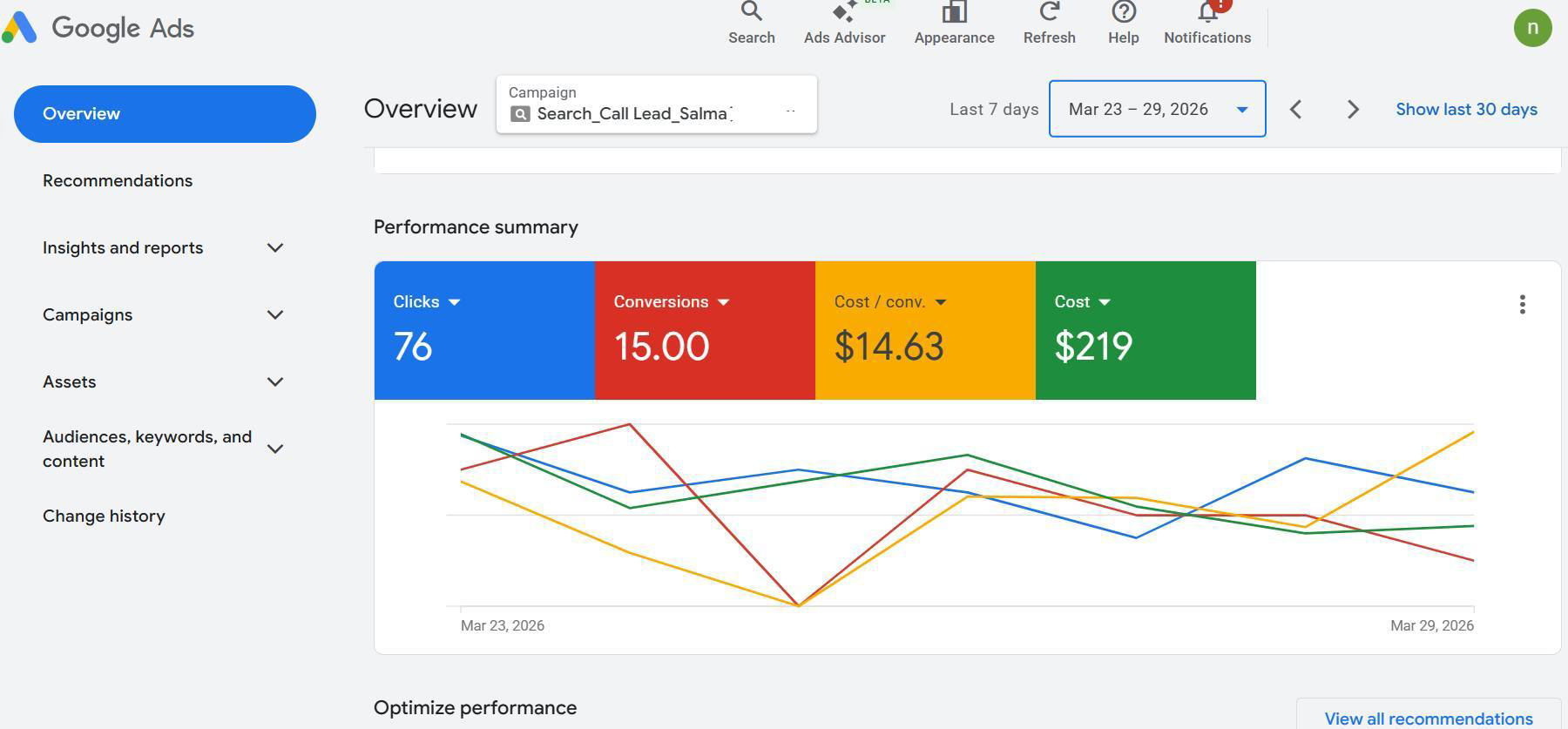
When running campaigns for your digital marketing projects or courses, the Google Ads dashboard provides a wealth of metrics. To maintain a data-driven strategy, these are the five most critical Key Performance Indicators (KPIs) to monitor:
Google ads management

Professional Google Ads Management

1. Click-Through Rate (CTR)

What it is: The percentage of people who clicked your ad after seeing it (Clicks ÷ Impressions).

Why it matters: CTR is the ultimate “relevancy” metric. A high CTR suggests your ad copy and keywords are perfectly aligned with what the user is searching for. If you’re seeing a low CTR on ads for your web development or PHP courses, it’s a sign that the headline isn’t catching the eye or the keywords are too broad.

2. Conversion Rate (CVR)

What it is: The percentage of ad clicks that resulted in a completed “conversion” action, such as a course signup or an eBook download.

Why it matters: While CTR tells you if your ad is good, CVR tells you if your landing page is good. If people are clicking but not converting on your LMS site, there may be “friction” on the page—perhaps the checkout process is too long or the “Buy Now” button isn’t prominent enough.

3. Cost Per Conversion (CPA)

What it is: The total cost of your ad spend divided by the number of conversions.

Why it matters: This is the primary “profitability” metric. If you are selling a digital product for $50, but your Cost Per Conversion is $60, you are losing money. Monitoring this allows you to adjust your bids or refine your targeting to ensure your marketing spend remains sustainable.

4. Quality Score

What it is: A rating from 1 to 10 that Google gives your keywords based on ad relevance, expected CTR, and landing page experience.

Why it matters: This is a “behind-the-scenes” data point that directly affects your wallet. A high Quality Score lowers your Cost Per Click (CPC) and helps your ad show up in higher positions for less money. It rewards you for having high-quality, relevant content that matches the user’s search intent.

5. Search Impression Share

What it is: The percentage of times your ad was shown out of the total number of times it was eligible to be shown.

Why it matters: This reveals your “room for growth.” If your Impression Share is only 20%, it means 80% of the time people are searching for your keywords, your ad isn’t appearing—usually because of a limited budget or a low Ad Rank. This data point tells you exactly how much more traffic you could capture if you scaled up.

Core Takeaway

The goal of all these tools—whether you are promoting your PHP courses, your LMS, or freelance services—is to create a feedback loop: Collect data -> Analyze patterns -> Optimize -> Repeat. This ensures you spend your budget only on the keywords and content that actually generate revenue.

As a Full Stack Developer and Project Manager, building a high-performing website is about more than just writing clean code—it’s about creating a scalable asset that solves real business problems.

Whether you are looking to launch an e-commerce platform, a custom Learning Management System (LMS), or a high-converting business site, I am currently open to new projects. My focus is on delivering end-to-end solutions that bridge the gap between technical architecture and strategic project management.

I specialize in:
✅ Full-Stack Development: Modern, responsive, and secure web applications.
✅ E-commerce & LMS Integration: Specialized systems designed for selling products and digital courses.
✅ Agile Project Management: Ensuring your project stays on track, within budget, and aligned with your goals.
✅ Digital Optimization: Building for speed, SEO, and long-term scalability.

If you’re ready to turn your vision into a robust digital reality, let’s connect. Send me a DM or comment below to discuss how we can build something impactful together.

Learn more here:

Our Development Journey & Expertise

Leave a Comment