
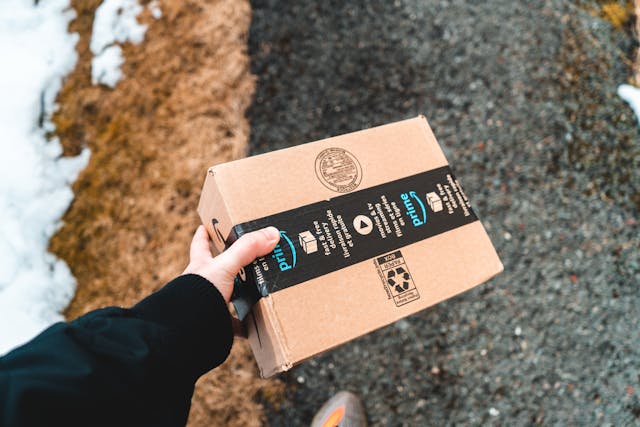
Amazon is still the biggest online marketplace in the US, and most of what it sells comes from independent sellers, many of them small businesses. This research summary looks at market size, who buys and sells, the pain points, how logistics and payments work, and the steps to start selling.
Editor’s note for review: the statistics below come from the original 2024 and 2025 research. Please verify each figure against current sources and add the date and source for each before publishing.
Video: Amazon marketplace overview
1. Market size and growth (verify)
| Measure | Detail | Year |
|---|---|---|
| US-based active third-party sellers | About 1.1 million | 2025 |
| Share of units sold by independent sellers | Over 60 percent | 2025 |
| Third-party seller services revenue | About $56 billion | 2024 |
| Average annual sales per US independent seller | Over $290,000 | 2024 |
| Sellers above $1 million in sales | More than 55,000 | 2024 |
The total number of sellers is expected to level off, with many new sellers joining each day and many leaving. That means high competition and high turnover.
2. Market sizing (TAM, SAM, SOM)
- TAM: all US e-commerce, roughly $1.2 trillion or more.
- SAM: the portion sold on Amazon, around $500 billion, since Amazon accounts for close to 40 percent of US e-commerce in the original estimate.
- SOM: varies by category. The original suggests 1 to 5 percent of SAM in a niche over the first one to two years for a successful launch.
3. Buyers and sellers
Buyers
- Roughly 181 million US Prime members [verify], a large, convenience-minded audience.
- Strong loyalty to Amazon itself, with many product searches starting there rather than on search engines.
- Heavy participation in events such as Prime Day.
Sellers
- Profile: the largest age group is 25 to 34, and most sellers are self-funded.
- Motivations: being your own boss, extra income and flexibility.
- Start-up behaviour: many spend $1,000 to $5,000 to start, most are operating within six months and half spend ten hours a week or less.
- Models: private label is most common, followed by wholesale, retail and online arbitrage and dropshipping. Handmade sellers reported higher margins in the original data.
4. Pain points and motivations
Challenges
- Competition: categories such as Home and Kitchen are crowded, which pressures profit.
- Rising costs: fulfilment and storage fees, plus advertising that can take a large share of sales to stay visible.
- Policy and inventory complexity: a leading reason many sellers leave each year.
Why sellers choose Amazon
- Customer trust: you sell in a store that shoppers already trust.
- FBA: outsourcing shipping, storage and customer service is the biggest operational benefit, and most sellers use it.
- Brand protection: Brand Registry and automated controls help guard against counterfeit and infringing listings.
5. Logistics, payments and safety
- FBA (Fulfilment by Amazon): you send inventory to Amazon, which stores, packs, ships and handles returns, and makes items Prime-eligible.
- FBM (Fulfilment by Merchant): you handle everything yourself.
- Multi-Channel Fulfilment: use Amazon inventory to fulfil orders from other channels such as Shopify.
- Payments: Amazon processes buyer payments and pays sellers about every 14 days by direct deposit. Seller Central shows fees and revenue.
- Brand Registry: a free programme for registered trademark owners with extra listing control and reporting tools.
- Account vetting: registration requires identity and business documents as a defence against fraud.
6. Getting started: onboarding steps
- Choose a plan: Individual (pay per item, suited to selling fewer than about 40 units a month) or Professional (monthly fee, needed for Brand Registry, B2B and bulk listing).
- Register: you will need an email address, a chargeable credit card, government ID, tax information (W-9 or W-8BEN), a phone number and bank details.
- Choose a product: confirm it follows Amazon’s product safety and restricted product rules.
- Enrol your brand in Brand Registry if you own a registered trademark.
- Create listings: match an existing product page by GTIN, UPC or EAN, or create a new page with title, description, images and price.
- Choose fulfilment: FBA is usually recommended. Convert the listing to FBA and create a shipment plan with the Send to Amazon workflow.
- Prep and label: follow Amazon’s packaging and labelling rules, such as barcodes and poly-bagging.
- Ship and launch: once Amazon checks in your inventory, listings go live and become Prime-eligible.
The bottom line
Amazon offers huge reach and customer trust, but also high competition and rising costs. Successful small sellers pick a defensible niche, protect their brand, watch fees and advertising costs and use FBA to scale.
Frequently asked questions
How much money do I need to start?
Many sellers start with a few thousand dollars, mostly for inventory. Your category and model will change this.
Should I use FBA or FBM?
FBA is the default for scale and Prime eligibility. FBM can suit large, fragile or low-volume items.
Do I need Brand Registry?
If you own a registered trademark, yes. It gives better protection and more tools.
Can you help me sell on Amazon?
I help with marketplace strategy, ads and your own website. Book a free 20-minute call.
Keep learning
Read next: Walmart Marketplace research and multichannel PPC blueprint.